
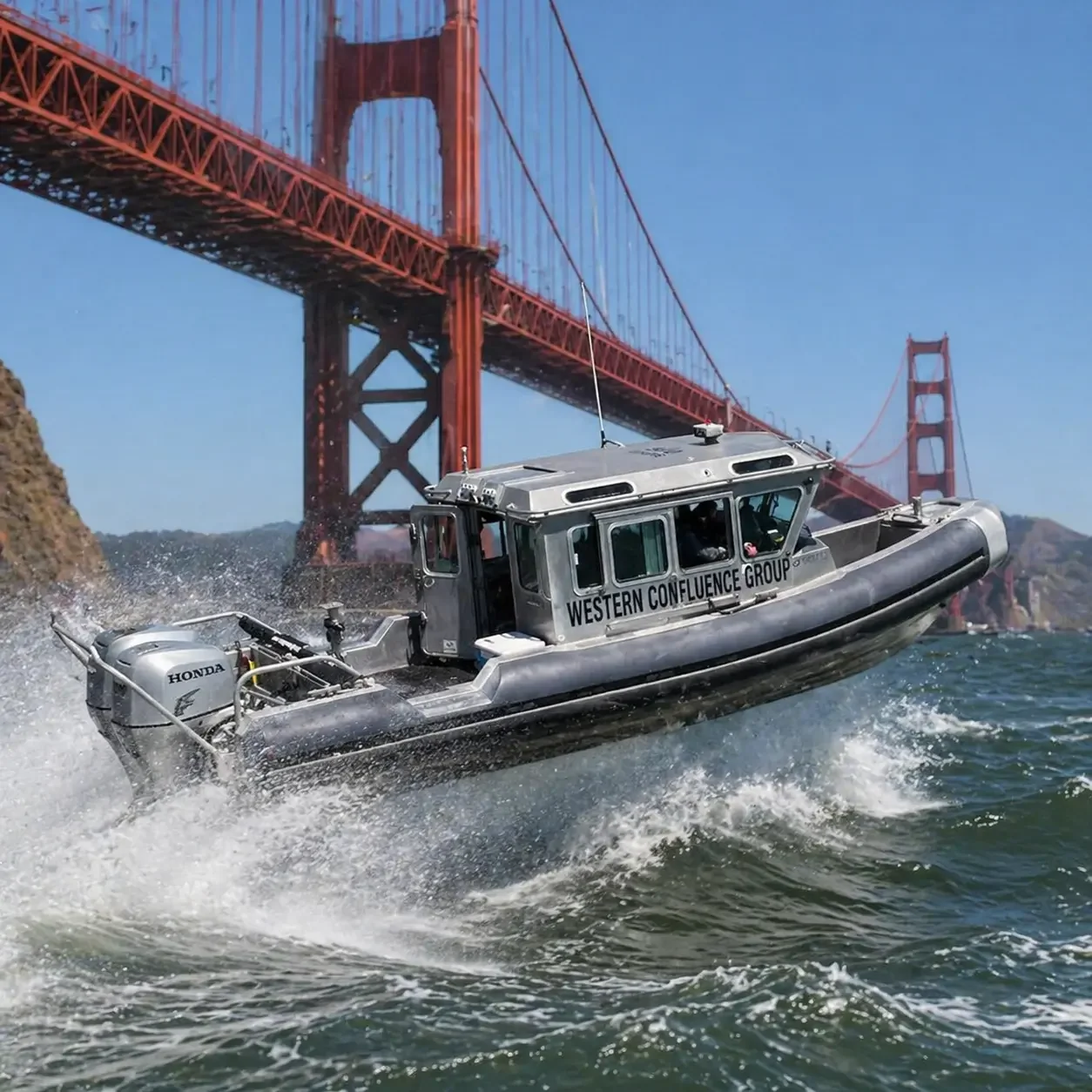
Maritime & Flight SupportMission-Ready Support for Maritime and Aerospace Operations
Western Confluence Group delivers advanced maritime and flight test support for clients and companies conducting operations on water or in the air. We are mission-proven in supporting experimental aircraft operations, prototype vehicle testing, and over-water aerospace trials.
Our personnel are cross-trained in aquatic rescue, tactical medicine, and executive protection—and operate in direct coordination with test directors, safety officers, and control teams. We also support private security and standby rescue for high-net-worth clients during yacht travel, island transit, or other marine-based excursions.
Maritime Support
Rescue divers and surface swimmers for in-water standby
Vessel-based EP coverage and discreet transport
Private dock/marina security
Shore-to-ship logistics and gear transfer
Flight Test & Aerospace Support
Support for experimental aircraft, eVTOL, and unmanned systems over water
Downrange safety staging and test article recovery
Integrated communications with range control and aerospace safety teams
Contingency planning for capsule, rotorcraft, and airframe splashdown events
Safety staging for test pilots, engineers, and support personnel
PERSONNEL PROFILE
Our team is composed of elite, multi-disciplined professionals:
Rescue Divers (ERDI, PADI, PSD)
Surface Rescue Swimmers with real-world surf/ocean deployments
ALS-certified paramedics with aquatic rescue training
USCG-licensed captains with security integration
EP agents cross-trained in waterborne operations
Former and Active-Duty Backgrounds Include:
U.S. Navy SEALs
SWCC (Special Warfare Combatant-Craft Crewmen)
U.S. military rescue swimmers
Firefighter paramedics
Lifeguards and water safety instructors
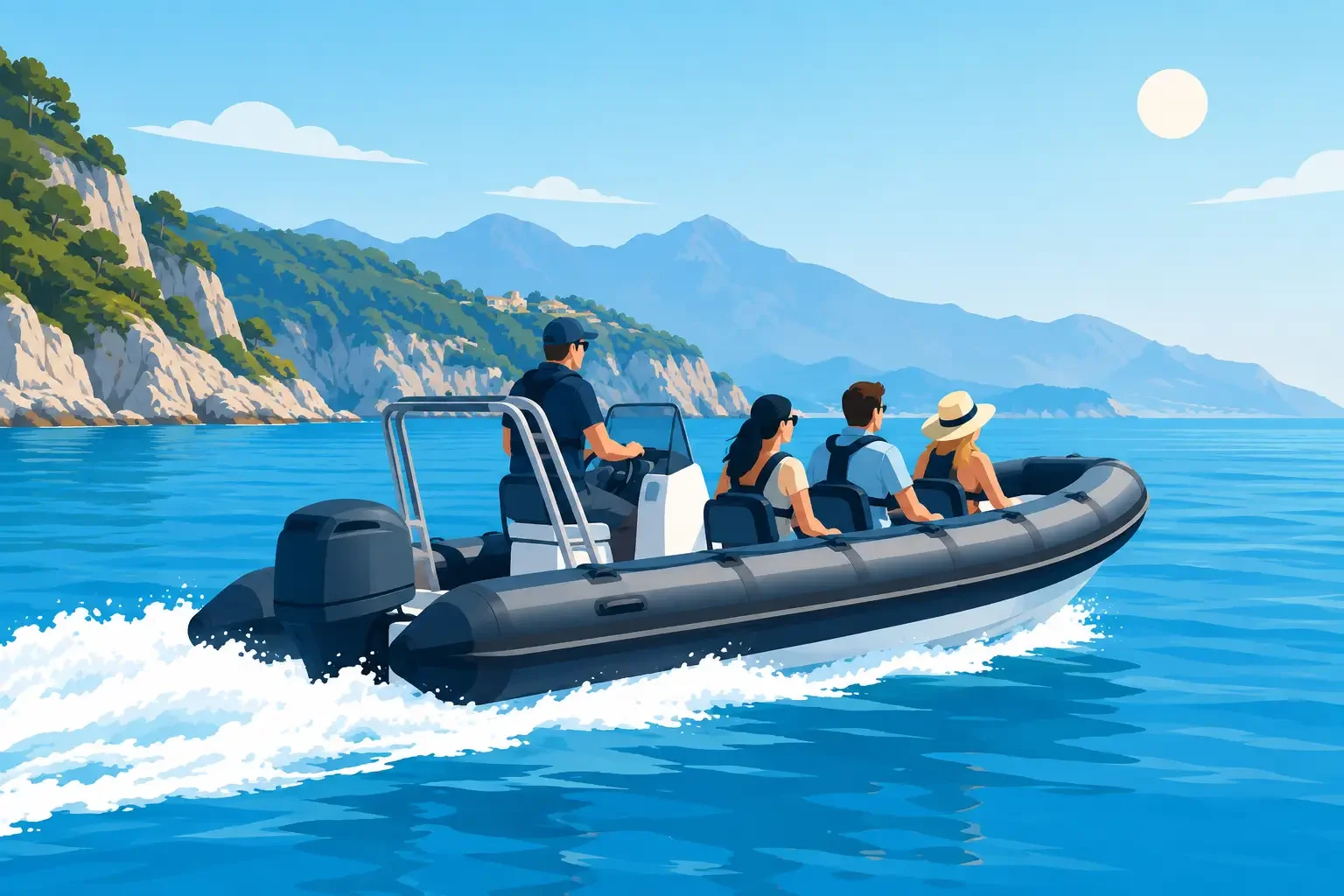
Top Reasons to Choose Zodiac Boat Excursions
A whale surfaces, a sea lion lifts its head from a rocky ledge, and your captain can safely adjust course within moments. That is the difference between watching the coast pass by and being genuinely out in it. The top reasons to choose Zodiac excursions come down to access, intimacy, and the kind of fast-moving adventure that makes the Central Coast feel wonderfully close.
A Zodiac is not a floating viewing platform built for hundreds of people. It is a rigid-hull inflatable boat, often called a RHIB, designed to run efficiently, handle changing conditions, and get passengers nearer to the action when conditions allow. For travelers who want more than distant views from a crowded deck, that changes the entire day on the water.
Why a Zodiac changes the coastal experience
The Central Coast is full of details that are easy to miss from shore: sculpted cliffs, tucked-away coves, bird-covered rocks, kelp forests, and marine mammals moving just beyond the break. A Zodiac brings a small group into that landscape at water level, where the scale of the coastline feels more immediate.
The ride has energy. You may feel the breeze, hear the water against the hull, and move quickly from one point of interest to the next. At the same time, a professionally operated excursion is about judgment, not speed for its own sake. Your captain reads the water, respects wildlife distance, and selects the route according to ocean conditions and the group aboard.
7 top reasons to choose Zodiac excursions
1. Get closer to the places large boats cannot reach
A Zodiac's compact profile and nimble handling make it especially well suited to nearshore exploration. Rather than spending the whole outing far offshore, the boat can approach coastal features and wildlife zones that are impractical or inaccessible for larger sightseeing vessels.
That may mean taking in dramatic rock formations from a better angle, tracing the edge of a quiet cove, or getting a close look at sea caves when tides and conditions permit. The point is not to force a route. It is to have the flexibility to take advantage of the best conditions of the day.
2. Spend less time getting there and more time experiencing it
A fast RHIB can cover ground quickly. That matters when wildlife is active in one area, when the best ocean conditions are farther along the coast, or when your group wants a varied outing rather than a slow cruise in one direction.
The 28-foot military-grade Zodiac used by SLO Tours is built for capable coastal travel, helping guests reach scenic zones efficiently while maintaining a stable, purposeful ride. More range does not promise a specific animal encounter, but it gives your captain more options to pursue the best experience available that day.
3. Enjoy a genuinely small-group outing
On a boat carrying just six passengers, there is no need to fight for rail space, peer around rows of people, or feel like one more face in a large tour crowd. Everyone has a clear view and a stronger connection to what the captain is pointing out.
Small groups also create a better rhythm. Couples can share a memorable outing without the noise of a packed boat. Families can ask questions. Friends can celebrate together. If a pod of dolphins appears or a whale is spotted at a respectful distance, the moment belongs to everyone aboard rather than disappearing into the commotion of a larger vessel.
4. See wildlife from a more personal perspective
Wildlife is never scripted, and responsible operators do not chase or crowd animals. Still, being low to the water and mobile can make sightings feel far more immediate. Dolphins may surface alongside the boat. Harbor seals and sea lions may rest along the rocks. Seabirds often work the same productive waters where larger marine life feeds.
Seasonal whale watching is a major draw near Pismo Beach, particularly when migration and feeding patterns bring whales through the area. Some days deliver a remarkable show; others offer subtler rewards, such as a quiet stretch of coastline, active birdlife, or playful dolphins. That uncertainty is part of what makes a real ocean outing different from an attraction with guaranteed outcomes.
5. Feel the adventure without giving up professional guidance
For many first-time guests, a Zodiac sounds thrilling but also raises a fair question: Will it feel safe? The right experience balances both. A capable vessel, appropriate safety equipment, experienced operation, and conservative decisions about weather and sea state are what turn a high-energy boat ride into a well-managed adventure.
You do not need boating experience to enjoy it. You do need to be comfortable outdoors, willing to follow captain instructions, and ready for wind, spray, and motion. The excitement is real, but it comes with a crew that knows the local harbor, nearshore conditions, and how quickly the Pacific can change.
6. Make the outing fit your group, not the other way around
A private Zodiac charter can be a better choice when you have a specific reason to get on the water. It gives couples a memorable way to mark an occasion, gives families more room to move at their own pace, and gives visiting friends an experience that feels distinctly local.
Private time also works well for guests who want to focus on scenic cruising, photography, wildlife viewing, or simply being away from the beach crowds. For more meaningful occasions, a professionally managed ash scattering service provides a respectful setting and practical support for families who want a private moment at sea.
7. Bring home a Central Coast memory that feels earned
There is a big difference between taking a photo of the ocean and remembering the cold salt air, the sudden turn toward a dolphin pod, or the view of the coast from a perspective most visitors never see. Zodiac excursions have a way of making a few hours feel larger than the clock says.
That is especially valuable when a vacation schedule is short. A beach day is easy to plan, but an intimate marine adventure gives the trip a story. It is active without requiring advanced skill, scenic without being passive, and flexible enough to reflect the conditions that make each day on the water different.
Is a Zodiac excursion the right fit for you?
A Zodiac adventure is an excellent fit for travelers who want a more active, outdoor-minded boat experience. Dress in layers, wear secure footwear, bring sunglasses, and expect the possibility of sea spray. Morning trips can feel cool even on sunny days, while afternoon wind may make the ride livelier.
It may not be the best match for everyone. Guests with significant mobility concerns, serious back or neck sensitivities, or a strong discomfort with motion should ask questions before booking. Young children may be welcome depending on age, conditions, and operator requirements, but parents should consider whether their child will enjoy a faster, open-air ride. Pregnant guests should also consult their medical provider and the operator's participation guidance.
Weather plays a role, too. Calm seas can make a Zodiac feel remarkably smooth; choppier water can make it more exhilarating. A professional captain may alter the route, postpone, or cancel a trip when conditions are not right. That is not a disappointment in service - it is exactly the judgment you want from a coastal operator.
If you are choosing between a large whale-watch boat and a Zodiac, consider the experience you want. Larger vessels can offer more onboard amenities and may feel more comfortable for guests seeking a gentler ride. A Zodiac trades those amenities for speed, access, personal attention, and an unmistakable sense of being part of the coastal environment.
Before you head to the harbor, check the forecast, arrive ready to listen to the pre-departure briefing, and leave a little room in the day for surprise. The best ocean memories often begin with a plan, then become something no itinerary could predict.
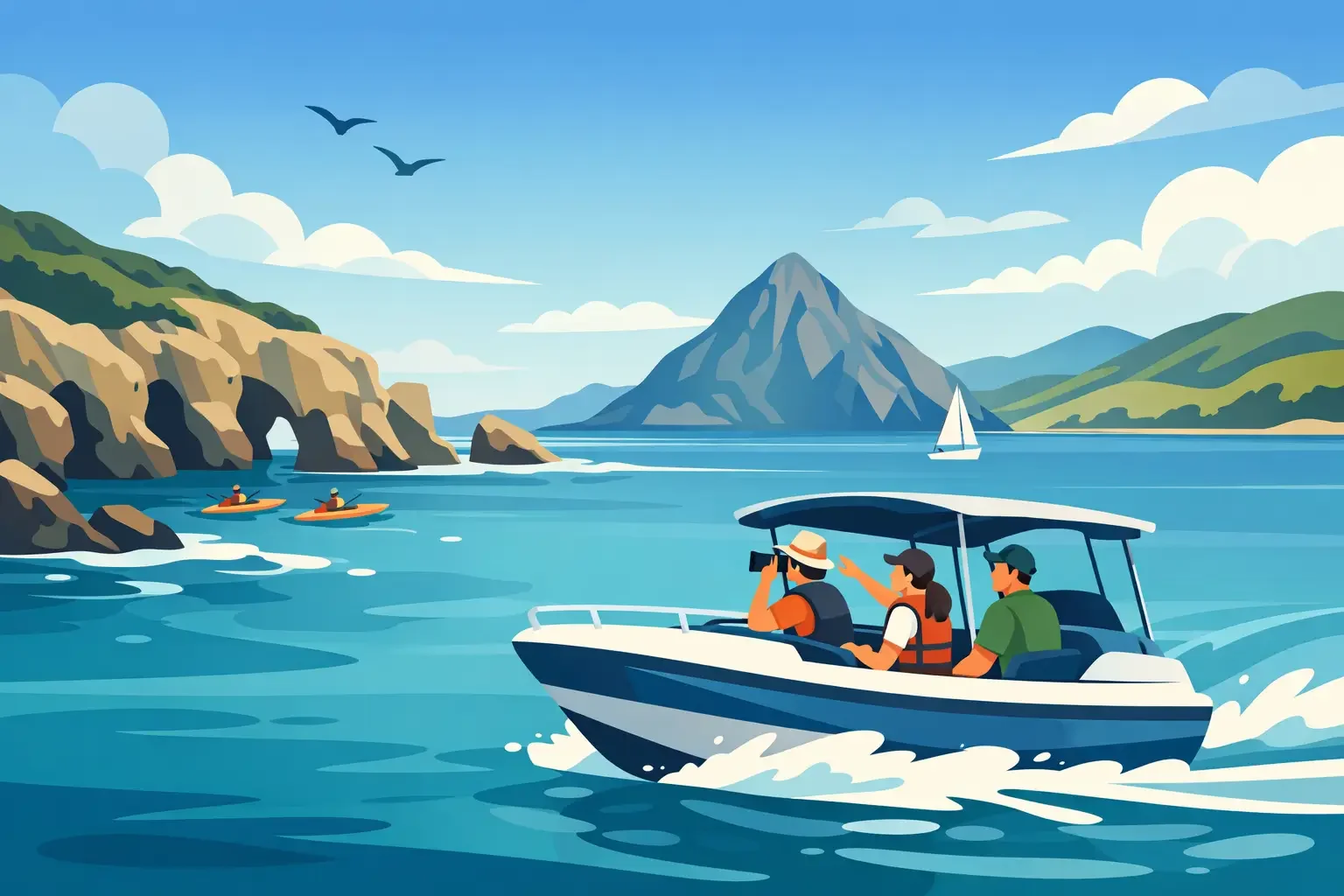
San Luis Obispo Boat Tours for Real Adventure
A good coastal outing should feel bigger than a slow lap around the harbor. The best San Luis Obispo boat tours put you near the action: rock formations rising out of the Pacific, sea caves shaped by winter swells, playful sea lions, and wide-open views that make the coastline look entirely different from the beach.
For travelers staying near Avila Beach or Pismo Beach, getting on the water is one of the few ways to experience the Central Coast at full scale. It can be thrilling, peaceful, funny, and unexpectedly moving - sometimes all in the same hour. The key is choosing a tour that matches the kind of day you actually want.
What Makes San Luis Obispo Boat Tours Different?
The coastline here is not built for cookie-cutter sightseeing. Port San Luis sits beside protected harbor water, dramatic bluffs, working waterfront views, and wildlife-rich nearshore habitat. Just beyond the breakwater, the route can shift quickly from calm harbor cruising to a lively Pacific adventure.
That variety is exactly what makes a small boat tour such a strong fit. Larger vessels offer their own advantages, especially for travelers who prefer a slower ride or need more onboard space. But they are limited in where they can go, how closely they can approach certain coastal features, and how personal the experience feels.
A smaller rigid-hull inflatable boat, or RHIB, can cover more coastline efficiently and maneuver into areas that are not practical for bigger tour boats. On the right day, that means getting a closer look at sea caves, kelp beds, hidden coves, and offshore rocks where marine life gathers. It is less like watching the coast from a floating viewing platform and more like being part of it.
Why a Six-Passenger Zodiac Changes the Experience
The boat matters. A 28-foot military-grade Zodiac RHIB such as the Whale Express is built for responsive handling, speed, and a ride that feels connected to the water. Its compact size allows the captain to tailor the route to the conditions and the interests of the guests, rather than following one fixed path with a large crowd.
With only six passengers, there is room to ask questions, shift positions for photos, and hear the guide without competing with dozens of conversations. Families can share the excitement together. Couples can enjoy a more private outing. Visiting friends can turn a regular beach day into the part of the trip everyone talks about afterward.
The trade-off is straightforward: this is an active boat experience. You may feel ocean motion, hear the wind, and get an occasional splash depending on conditions. For many guests, that is the point. If your ideal cruise involves indoor seating and minimal movement, a larger sightseeing vessel may be a better fit. If you want the energy of a fast, professionally guided coastal run, a Zodiac adventure delivers something much more immediate.
Choose the Right Kind of Coastal Tour
Not every outing on the water should have the same goal. Before booking, think about whether your group is after wildlife, sightseeing, a private celebration, or a meaningful moment of remembrance.
Harbor Adventures and Coastal Sightseeing
A harbor adventure is an excellent choice for first-time boat tour guests, families with older children, and visitors who want a concentrated dose of Central Coast scenery. The route may include Port San Luis, Avila-area landmarks, rocky shoreline, and nearshore wildlife zones, with conditions guiding the exact plan.
This type of trip is about more than checking a boat ride off a vacation list. A skilled local captain can explain what you are seeing and why it matters, from the history of the port to the habits of the animals resting on the rocks. The details turn a beautiful view into a place you understand.
Seasonal Whale Watching
Whale watching adds an element of real uncertainty, which is part of what makes it exciting. During the right season, the waters off Pismo Beach can offer opportunities to search for migrating whales along with dolphins, sea lions, seabirds, and other marine life.
No ethical operator should promise a whale sighting. These animals are wild, their movement changes with food sources and conditions, and every trip is different. Still, a small, fast boat gives a captain the flexibility to cover promising areas and respond when wildlife appears, while maintaining respectful distance and following responsible viewing practices.
Even on a day without whales, the ride can be packed with wildlife moments. A pod of dolphins racing alongside the boat, sea otters drifting through kelp, or a cluster of California sea lions barking from a rocky haul-out can quickly become the highlight of the trip.
Private Charters
Private charters make sense when the experience matters as much as the destination. They work especially well for anniversaries, birthdays, visiting family, proposal plans, photography outings, and small groups that want control over the pace.
A private boat gives your group the space to focus on what you came for. Maybe that is lingering near the coastline for photos, spending more time looking for wildlife, or simply enjoying the freedom of having the boat to yourselves. Because ocean conditions always set the boundaries, flexibility is valuable. A good captain will build the best route around safety, comfort, and the day’s opportunities.
Ash Scattering at Sea
For families honoring someone they love, an ash scattering service should feel calm, respectful, and carefully managed. The ocean can offer a powerful setting for a farewell, especially for someone with a connection to the Central Coast, fishing, surfing, sailing, or the beach.
A small private vessel allows the ceremony to remain personal. There is time for family members to speak, pause, and be present without the pressure of a crowded public setting. Professional guidance also removes the logistical burden during a difficult moment, so families can focus on the person they are remembering.
Wildlife Encounters Are Better When You Arrive Prepared
Marine wildlife is never on a schedule, but preparation helps guests enjoy whatever the ocean offers. Dress in layers, even when the beach feels warm. The water is often cooler, and wind can make the ride feel brisk. A light waterproof layer, secure shoes, sunglasses, and sunscreen are smart choices.
Bring a camera or phone, but secure it before the boat gets moving. The best photos often happen quickly: a dolphin breaks the surface, a pelican skims past the wake, or sunlight hits the cliffs just right. Watching with your own eyes first is usually worth it. The camera can come up after you have taken in the moment.
If you are concerned about motion sickness, plan ahead rather than waiting to see how you feel offshore. Consider your preferred remedy before the trip, eat lightly, stay hydrated, and keep your eyes on the horizon. Let the crew know if you are uncertain. Experienced guides want guests to be comfortable and can offer practical advice.
Is a Zodiac Tour Right for Your Group?
For adventurous families, couples, locals, and travelers who prefer intimate experiences, the answer is often yes. A six-passenger format keeps the trip personal while the boat’s performance adds real excitement. You are not just observing the Pacific from a distance. You are feeling its movement, hearing the water along the hull, and seeing the coast from the angle it was meant to be seen.
That said, consider each guest’s comfort with motion and mobility. Conditions can vary, boarding may require a step down into the vessel, and the ride can be bouncy on a windy day. Honest expectations lead to better outings. A professionally operated tour should be exciting without making anyone feel pressured to take on more than they are comfortable with.
SLO Tours has operated Central Coast adventures since 2009, pairing close-up sightseeing with the confidence that comes from knowing these waters well. The goal is not to rush past the coastline. It is to show guests the details that most people never reach from shore.
When you are ready to trade the usual overlook for salt air, open water, and a front-row view of the coast, choose the trip that leaves room for surprise. The Pacific tends to reward people who get close enough to pay attention.

San Luis Obispo Tours for a Better Coast Day
The Central Coast looks different from the water. On the right day, you can watch pelicans skim the surface outside Port San Luis, spot sea lions resting near the harbor, and see the sandstone coastline from an angle most visitors miss. That is what makes San Luis Obispo Tours worth planning around: they turn a beautiful beach day into a real on-the-water experience.
For travelers, couples, families, and locals looking for more than a crowded sightseeing cruise, a small-group Zodiac trip offers a faster, closer way to experience the Avila Beach and Pismo Beach coastline.
Why San Luis Obispo Tours Feel More Personal
Not every boat tour delivers the same kind of day. Larger vessels have their place, especially for guests who prefer a bigger deck and a slower pace. But they cannot always get near sea caves, rocky coves, and nearshore wildlife zones the way a compact rigid inflatable boat can.
A 28-foot military-grade Zodiac RHIB is built for maneuverability and stability. It moves quickly when conditions allow, turns easily for a better wildlife view, and keeps the group small enough that guests can hear the guide, ask questions, and enjoy the moment without competing for rail space.
With only six passengers aboard the Whale Express, the outing feels more like a private coastal adventure than a standard tour. That matters when a pod of dolphins appears off the bow or a curious harbor seal pops up nearby. There is time to look, take photos, and enjoy the surprise instead of being rushed along with a crowd.
Choose the Right Coastal Adventure
The best tour depends on what you want from your time on the water. If you want a short, high-energy introduction to the coast, a Zodiac harbor adventure is a strong choice. It combines harbor history, dramatic shoreline scenery, local wildlife, and the fun of riding in a fast, capable boat.
Wildlife and whale watching
Seasonal Pismo Beach whale watching tours are designed for guests hoping to see the Central Coast’s larger marine visitors. Whale activity varies by season, migration patterns, ocean conditions, and plain old luck, so no responsible operator should promise a sighting. Still, the ride itself is part of the experience: open water, broad coastal views, sea birds, dolphins, and the anticipation of seeing something remarkable.
Bring your camera, but do not spend the entire trip behind it. Wildlife encounters happen quickly, and the best photos often come after you have taken a moment to simply watch.
Private charters for your own plan
A private charter gives your group more flexibility. It can be a memorable choice for a family outing, a date, visiting friends, a birthday, or a small team looking for an experience that does not feel packaged.
Private trips are especially useful when your group has a particular pace in mind. Some guests want maximum wildlife time. Others want to focus on scenic exploration, coastal photography, or a relaxed harbor cruise. The route will always depend on sea conditions and captain judgment, but a private format creates more room to shape the experience around your group.
A respectful setting for ash scattering
The ocean can also be a meaningful place to say goodbye. Professionally guided ash scattering servicesprovide a respectful, private way for families to gather on the water and honor someone they love. The practical details matter during an emotional day, which is why working with an experienced local operator can bring welcome reassurance.
What to Know Before You Book
Boat adventures are exciting because the coast is active, not controlled. Conditions can change, and the captain may adjust the route for safety, comfort, or the best available wildlife opportunities. A little flexibility is part of having an authentic experience on the Pacific.
Dress for wind and spray, even when the shore feels warm. A light jacket, secure shoes, sunglasses, and sunscreen go a long way. Guests should also consider their comfort with a faster ride over moving water. Zodiac excursions are family-friendly, but they are more adventurous than a slow harbor cruise.
If you are traveling with younger children, anyone with mobility concerns, or a guest who is unsure about open-water conditions, ask about the trip’s requirements before booking. The right tour should feel exciting, not stressful.
Make Your Central Coast Day Count
A coastline this close to San Luis Obispo deserves more than a quick look from the bluff. Since 2009, SLO Tours has helped guests experience the coast at water level, where sea caves, wildlife, and wide-open views feel immediate and unforgettable.
Book the trip that fits your group, arrive ready for a little ocean spray, and let the coastline provide the story you will still be telling after the sand is out of your shoes.
Whale Updates of 2026
PISMO BEACH WHALE WATCHING UPDATE!
The whales are ON!
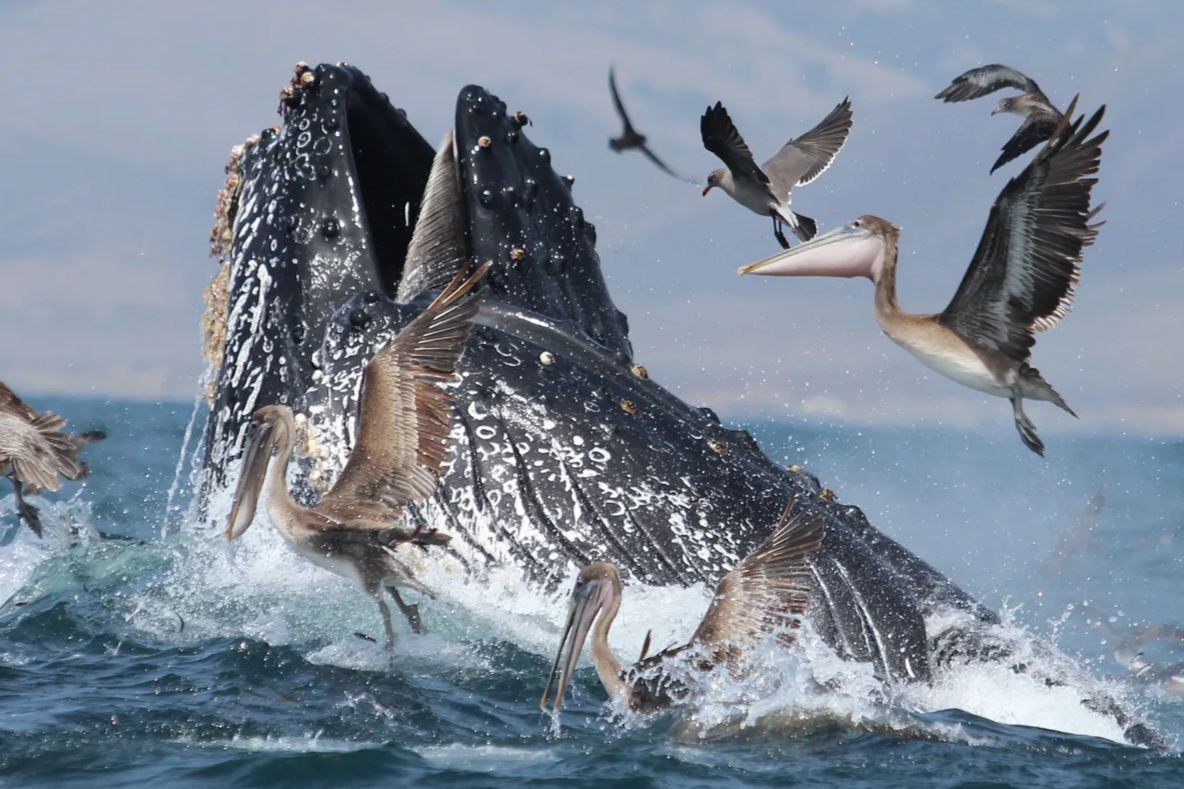
Humpback whales have been feeding heavily off the Central Coast, with recent trips finding dozens of humpbacks, lunge feeding, breaching, dolphins and huge groups of sea lions.
September has been producing some incredible whale-watching action — and the ocean is alive right now!
🐋 Humpbacks
🐬 Dolphins
🦭 Sea Lions
🌊 Feeding Frenzies
💥 Breaching Whales
Come experience Pismo Beach Whale Watching with SLO TOURS!
📍 Port San Luis • Avila Beach
🚤 Whale Express

Captain Micheal Brink with SLO tours
About Captain Micheal Brink
Captain Micheal Brink is the founder and captain of SLO TOURS, a family-owned Central Coast boating company operating from Port San Luis in Avila Beach. SLO TOURS has been serving guests since 2009, specializing in whale watching, harbor adventures, coastal wildlife tours, and private ocean experiences.
Captain Brink is known for combining professional boat handling, local knowledge, and a genuine passion for the ocean and marine wildlife. Guests have consistently described him as friendly, knowledgeable, entertaining, and skilled, with a talent for making every trip feel like a personal adventure rather than simply a boat ride.
His experience on the Central Coast has given him an intimate knowledge of the waters around Avila Beach, Pismo Beach, Port San Luis, and San Luis Obispo Bay. From searching for humpback whales and dolphins to exploring sea caves, rocky coastline, and local wildlife, Captain Brink brings an adventurous and educational approach to every trip. A 2023 feature on Central Coast whale watching highlighted his continuing excitement at witnessing whales breach near his boat.
Captain Brink also has experience responding to situations at sea beyond tourism. In 2019, he assisted a disabled sailboat offshore, traveling roughly 12 miles offshore in a 28-foot RIB to help bring the vessel back safely.
For Captain Micheal Brink, being a captain is more than operating a boat—it is about sharing the ocean. Whether guests are watching a humpback whale breach, cruising past sea lions and sea otters, exploring hidden coastal areas, or simply enjoying the beauty of the Central Coast, his goal is to create an experience guests will remember for years.
His knowledge and experience with sharks have also taken him into the world of television. Captain Brink has appeared on Discovery Channel’s Shark Week twice, bringing his firsthand knowledge of California’s waters and shark encounters to a national audience. A regional guide specifically notes his two Shark Week appearances.
His passion for sharks extends beyond television. Captain Brink previously opened a shark exhibit in Avila Beach featuring shark jaws, teeth, and educational displays designed to help people better understand and appreciate these often-misunderstood predators.
Whether he's searching for humpback whales, watching dolphins and sea lions, exploring sea caves, or sharing his knowledge of sharks, Captain Micheal Brink brings a unique combination of adventure, experience, and genuine love for the ocean to every SLO TOURS experience.
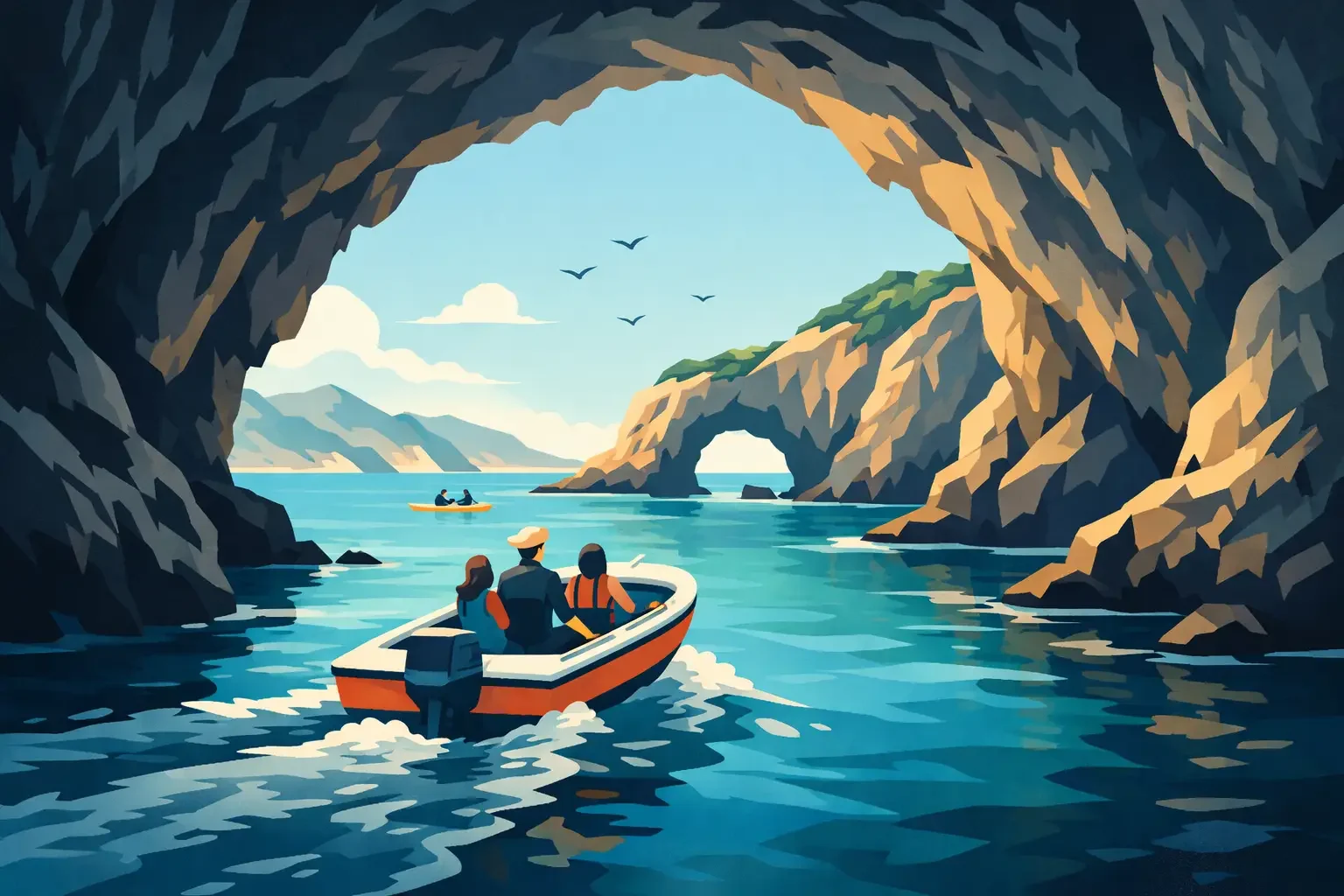
Sea Cave Boat Exploration on the Central Coast
The moment a boat slows near a narrow opening in the coastal cliffs, the Central Coast feels completely different. The shoreline is no longer just a view from the beach. During a sea cave boat exploration, you can see the texture of the rock, hear water echo against the walls, and spot the places where sea lions, seabirds, and shifting Pacific swells claim the edge of land.
That close-up perspective is what makes a small-boat trip so memorable. It is active, scenic, and full of surprises, but it also depends on the conditions. Sea caves are natural environments, not staged attractions. The best outings pair the thrill of getting close with a captain who knows when a cave is accessible, when wildlife needs space, and when the ocean is asking everyone to enjoy the view from farther out.
Why Sea Cave Boat Exploration Feels Different
From shore, caves can look like small shadows in a bluff. From the water, their scale becomes clearer. Some openings reveal high, sculpted ceilings and deep chambers carved over centuries. Others are low rock cutouts where sunlight flashes across kelp and water rushes in and out with each passing swell.
A maneuverable rigid-hull inflatable boat, often called a RHIB or Zodiac, can approach nearshore features in ways larger sightseeing vessels generally cannot. That does not mean forcing an entrance into every opening. It means having the ability to position the boat carefully, turn quickly, and give guests an excellent look at the cliffs, arches, coves, and wildlife zones along the route.
The ride is part of the experience. On calmer water, the boat may glide along the base of dramatic rock formations. When the ocean has a little energy, passengers feel the splash, the movement, and the excitement of traveling on the Pacific rather than simply watching it. For couples, families with older children, and groups looking for a real coastal adventure, that is often the point.
The Central Coast’s Changing Coastal Scene
The coastline near Port San Luis and Pismo Beach is shaped by wind, tide, seasonal light, and the Pacific itself. No two trips look exactly alike. Morning marine layer can make the cliffs feel moody and cinematic, while a clear afternoon may reveal bright blue water and long views down the coast.
Wildlife adds another layer. Harbor seals and California sea lions may rest on offshore rocks. Pelicans often glide low over the water, and cormorants gather along ledges near the cave entrances. In the right season, passengers may also see dolphins, whales, or feeding activity farther offshore.
Sightings can never be guaranteed, and that is part of an authentic marine outing. A guided trip is not a zoo visit with a fixed cast. It is a chance to be present in a working coastal habitat, with a captain reading the water and pointing out the details that are easy to miss from land.
What determines cave access
The ocean makes the final call. Swell size and direction, tide level, wind, visibility, and the specific cave entrance all affect whether a close approach is appropriate. A low tide may expose more rock but can also make a passage too shallow. A higher tide may provide depth while sending more water into the cave.
A responsible captain evaluates those variables continuously. If conditions are ideal, guests may get an extraordinary close-range look inside a sea cave. If conditions are questionable, the better choice may be enjoying the formation from outside and shifting attention to a nearby cove, wildlife haul-out, or scenic landmark. The route changes, but the adventure does not disappear.
Why the Right Boat and Captain Matter
Sea cave boat exploration is one activity where the vessel is more than transportation. Small-group capacity gives everyone a clearer view and lets the captain communicate easily with each passenger. You are not trying to peer around dozens of people for a glimpse of a rock arch or a sea lion pup resting in the sun.
A stable, military-grade 28-foot Zodiac RHIB is built for coastal conditions and designed to respond quickly. Its size and agility create access to nearshore scenery that is difficult to appreciate from a larger boat, while its sturdy design provides reassurance when the ride gets lively. At SLO Tours, the Whale Express carries up to six passengers, keeping the experience personal and giving each group room to enjoy the ride.
Local knowledge is just as valuable as boat capability. A captain familiar with the Central Coast understands the patterns of the harbor, the usual wind shifts, productive wildlife areas, and the landmarks that tell the story of this stretch of shoreline. That experience helps turn a fast boat ride into a well-paced outing with purpose.
How to Prepare for a Better Trip
You do not need technical boating experience to enjoy a cave-focused excursion, but a little preparation makes the day more comfortable. Coastal weather can feel cooler on the water than it does in town, even when the sun is out. Dress in layers, bring a wind-resistant outer layer, and wear footwear that stays secure on your feet.
Sunglasses, sunscreen, and a hat with a chin strap are smart additions. A phone or camera is welcome, but use a secure strap or waterproof case. The best photo may arrive quickly, whether it is a sea lion lifting its head from a rock shelf or a burst of light inside a cave opening.
If you are prone to motion sickness, plan ahead rather than waiting to see how you feel offshore. Rest well, stay hydrated, eat a light meal, and consider a remedy that works for you. Ask the tour operator about the expected ride conditions when you book, especially if someone in your group is uncertain about a faster boat experience.
Who will enjoy it most
This kind of trip is a strong fit for travelers who want more than a standard harbor cruise. It appeals to visitors looking for a standout Central Coast memory, locals wanting a fresh view of familiar beaches, and small groups celebrating an occasion without the crowds of a large tour boat.
It can also be a great family activity when participants meet the operator’s age and mobility requirements and are comfortable with an active ride. The key is choosing the experience honestly. A Zodiac adventure is not a quiet floating lounge. It is a hands-on coastal excursion with wind, motion, salt spray, and the possibility of an unforgettable close encounter with the shoreline.
Respect Makes the Experience Better
The most rewarding cave trips leave no mark on the places they visit. Wildlife needs distance, especially during resting, nesting, and pupping periods. Boats should never pressure animals into the water, crowd a rock haul-out, or block an animal’s path back to safety.
The same care applies to the caves. These formations are shaped slowly and can be dangerous when conditions change. Good operators avoid unnecessary risk, keep a careful eye on water movement, and treat a canceled cave approach as sound judgment rather than a disappointment.
Passengers can help by following crew directions, keeping arms and cameras safely inside the boat when requested, and resisting the urge to make noise around wildlife. The quieter and more respectful the group, the more likely everyone is to notice the natural sounds that make the coast feel alive.
Make Room for the Unexpected
The best sea cave outings are planned with a route in mind and enough flexibility to follow the day’s conditions. Maybe the water is glassy and a cave entrance opens up beautifully. Maybe a pod of dolphins changes the plan. Maybe a whale spout appears beyond the point, or a sea lion colony becomes the highlight.
That is the value of heading out with a capable small boat, an experienced local captain, and an open mind. Come prepared for a little spray, a little speed, and a coastline that refuses to perform the same way twice. The caves may bring you out on the water, but the full Pacific experience is what stays with you long after the boat returns to harbor.
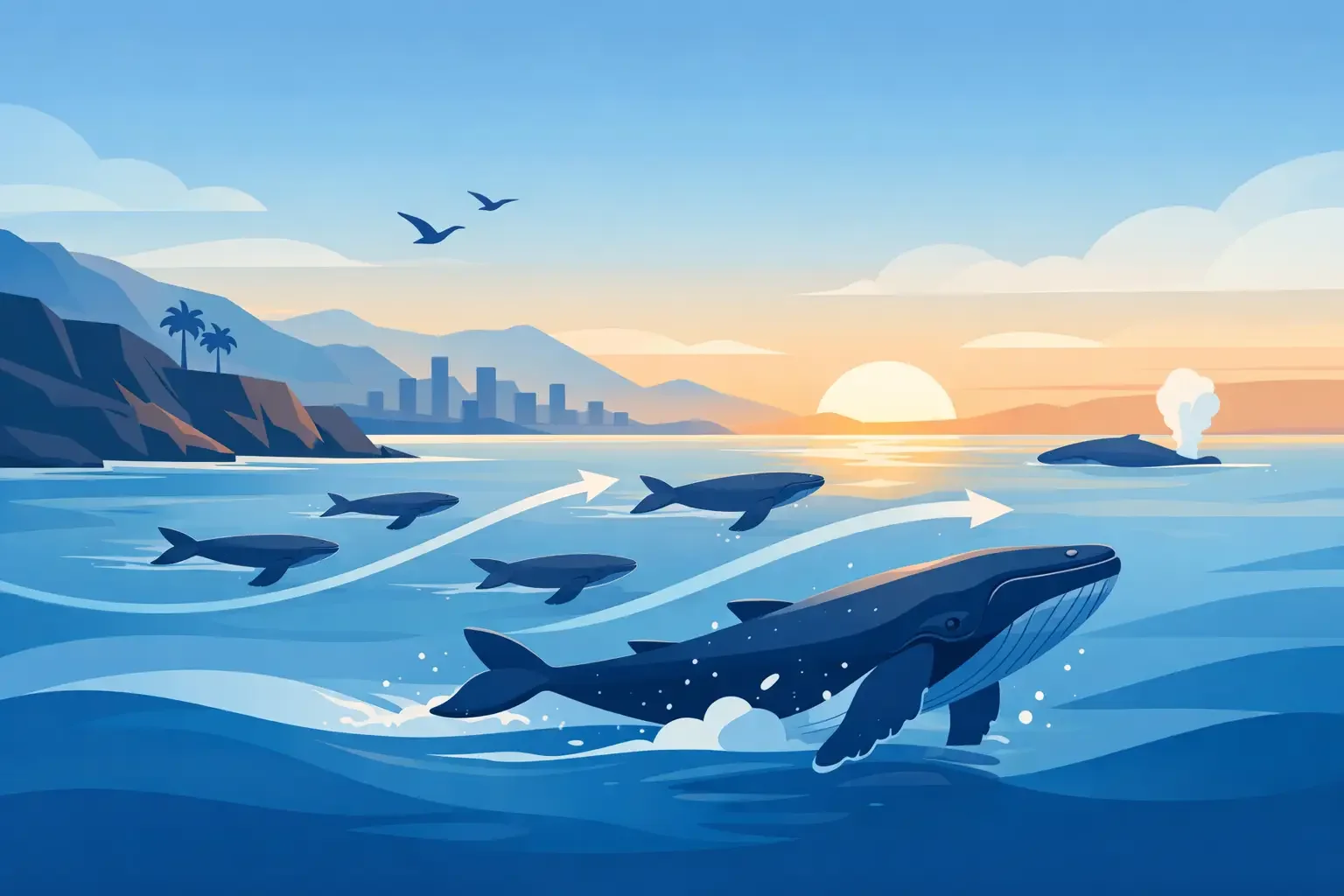

Film from Boat Projects in California’s Central Coast
A great movie can make a place feel larger than life. Then there are places that do the same thing without a screen. For travelers who love movie and cinema, California's Central Coast offers a setting that feels naturally cinematic: rugged bluffs, working harbors, rolling surf, sea caves, and marine wildlife appearing just when the scene needs it most.
This is not a theme-park version of the coast. It is wind in your face, salt spray on the rail, and the sudden sight of a whale blow on the horizon. Around Pismo Beach and Avila Beach, the landscape has the visual drama of a big-screen adventure, with the kind of unscripted moments no production crew can schedule.
Why the Central Coast Feels Made for the Screen
Cinema depends on contrast. A quiet close-up means more when it follows action. A wide landscape means more when a person can move through it. The Central Coast has both in a compact stretch of shoreline. One minute, the water inside Port San Luis may be calm enough to spot seabirds riding the surface. Minutes later, the open Pacific delivers a fast-moving, wide-angle view of cliffs, kelp beds, and the coastline unfolding ahead.
The colors do a lot of work, too. Morning can bring silvery water and coastal fog. By afternoon, sandstone bluffs warm up, the ocean turns a deeper blue, and the horizon sharpens. Near sunset, the same coastline can look entirely different. Travelers do not need to be photographers or film buffs to notice it. The scenery makes you look twice.
That visual variety is a big reason an on-the-water outing feels different from viewing the coast from a turnout or restaurant patio. From shore, you see a beautiful frame. From a boat, you move through the scene.
Movie and Cinema Moments You Cannot Script
The best coastal experiences have pacing. There is anticipation as the boat clears the harbor. There is the lift of excitement when the ride picks up. Then the captain slows down because something is moving near the waterline, a group of dolphins is running alongside, or a sea cave reveals a view that cannot be appreciated from land.
Wildlife is the real scene-stealer. Seasonal whale watching off Pismo Beach can offer the unforgettable moment everyone hopes for: a distant spout, then a closer look at an animal that makes even a 28-foot boat feel small. Dolphins, sea lions, otters, and coastal birds can create equally memorable encounters. Nature does not follow a call sheet, which is exactly what makes every trip feel personal.
There is a trade-off, and it is worth being clear about. A wildlife trip does not promise a specific animal on a specific day. Conditions change with weather, ocean temperature, season, and migration patterns. What a professionally guided small-group excursion does provide is the local knowledge, maneuverability, and time on the water that make the search part of the adventure rather than a passive wait.
A fast, stable Zodiac RHIB is especially suited to this style of experience. It can cover water efficiently, get a closer perspective on nearshore landmarks when conditions allow, and travel in a group small enough that guests can ask questions and actually hear the answers. That is a very different feeling from watching the coast from the back row of a crowded sightseeing vessel.
The View Changes When You Leave the Shore
A movie director chooses angles carefully because perspective changes the story. The same is true along the coast. From the beach, the ocean dominates the view. From offshore, the land becomes the spectacle.
Cliffs take on more scale when viewed from below. Harbor structures, coves, and hidden contours become visible. Sea caves and rock formations show why this shoreline rewards curiosity. The route always depends on sea conditions and responsible navigation, but that variability is part of the appeal. The ocean is not a fixed attraction with a predetermined path.
For families, that sense of movement can turn sightseeing into a shared story. Kids who might lose interest during a long land tour often stay engaged when there is spray, speed, wildlife, and a changing view. Couples get an experience that feels more memorable than another dinner reservation. Visiting friends get the kind of Central Coast outing that produces real stories instead of another set of identical vacation photos.
If your group wants control over the pace, a private charter is often the better choice. You can focus on wildlife viewing, coastal scenery, a special celebration, or simply time together on the water. It costs more than joining a shared departure, but the flexibility can matter when the occasion is personal or your group has a specific vision for the day.
Adventure Should Still Feel Well Managed
Cinematic does not have to mean reckless. The most satisfying boat adventures pair excitement with capable operation, clear expectations, and equipment built for the environment. A military-grade Zodiac RHIB offers a stable, responsive platform designed for coastal conditions, while a small passenger limit keeps the experience attentive and manageable.
Before booking, think honestly about your group's comfort level. Open-water rides can be exhilarating, but they may not be right for everyone, especially guests who are very sensitive to motion or uneasy around speed and spray. Dress for cooler conditions than you expect on land, bring an extra layer, and listen to the crew's safety guidance. A little preparation keeps the focus where it belongs: the coast, the wildlife, and the ride.
It also pays to choose the timing that suits your priorities. Whale watching is seasonal, while harbor and coastal adventures can offer excellent scenery throughout the year. Morning departures may bring softer light and a calmer feel. Later trips can feel brighter, warmer, and more energetic. There is no universally best departure. It depends on whether your group wants quiet observation, action, photography, or an easygoing coastal highlight.
Make Your Own Coastal Feature
The reason people remember a favorite movie scene is not only what they saw. It is how the scene made them feel: surprised, thrilled, peaceful, or connected to someone beside them. The same is true of a boat trip. The strongest moments are often small and unplanned - a sea lion lifting its head from the water, a child spotting dolphins first, a hidden cove appearing around a point, or the entire group going quiet as the coastline glows in late-day light.
SLO Tours has been taking guests out of Port San Luis since 2009, with the Whale Express built for close-up coastal exploration in a six-passenger format. That combination of local experience, a capable vessel, and a small group can turn a simple sightseeing plan into the defining adventure of a Central Coast visit.
The next time you are looking for a movie-worthy afternoon, skip the predictable view from the parking lot. Get out on the water, let the coastline set the scene, and give the Pacific room to surprise you.
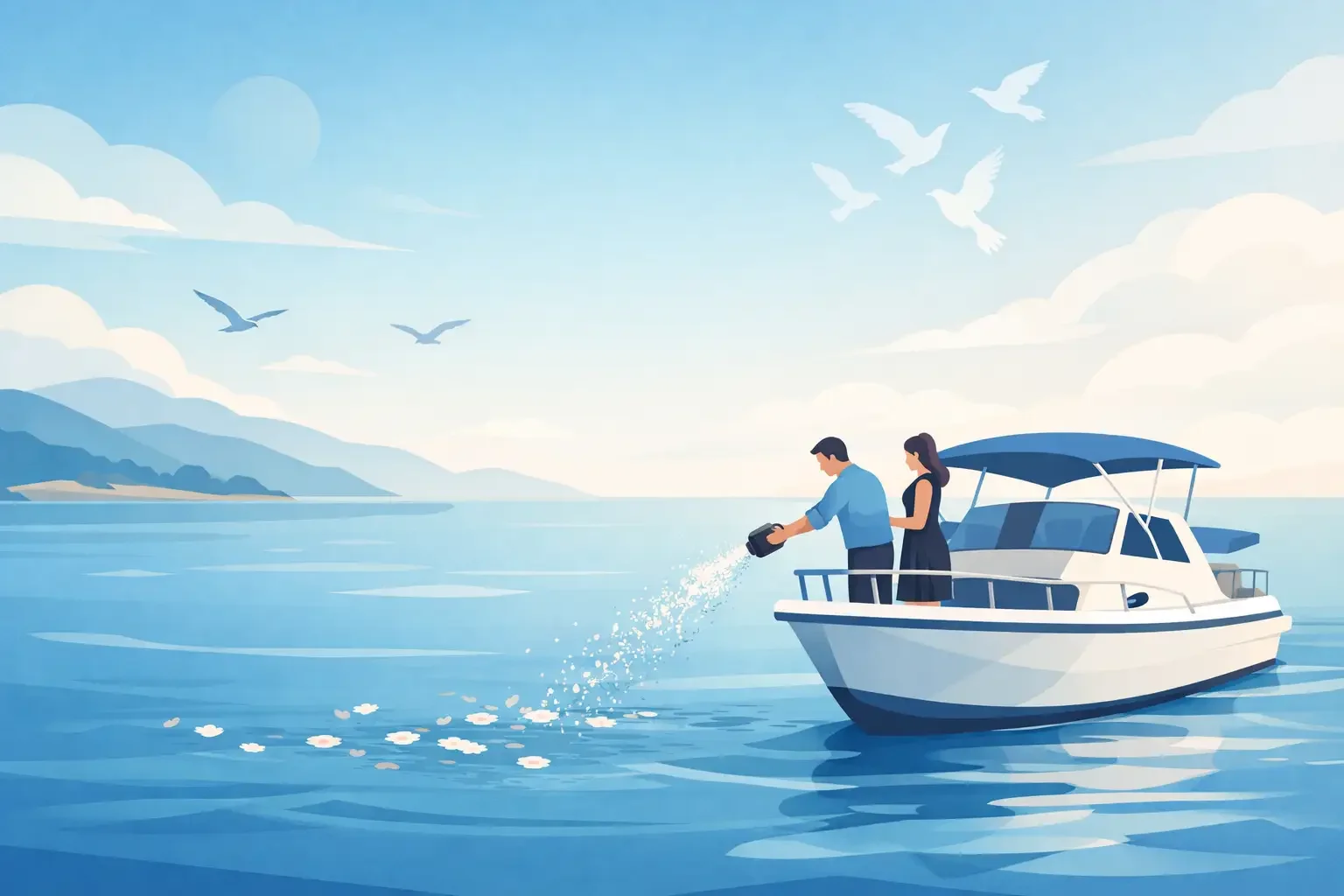
Ash Scattering Boat Charters
A memorial ash scattering by boat gives families something rare during a difficult time: room to breathe, an open horizon, and a farewell that can feel deeply personal rather than rushed. Off the Central Coast, the sea has a way of quieting the noise. The shoreline recedes, the engine settles into its rhythm, and the people closest to your loved one can focus on the moment together.
This kind of service is not a sightseeing trip with a brief ceremony added on. It is a private experience that deserves thoughtful planning, a capable crew, and enough flexibility to follow the family’s wishes. Here is what helps make an ash-scattering ceremony at sea feel respectful, safe, and true to the person being remembered.
Why choose memorial ash scattering by boat?
For some families, the ocean was part of a loved one’s life: a favorite fishing spot, years spent surfing or sailing, coastal vacations, or simply a connection to the view from shore. For others, it represents freedom, movement, and a place without walls. There is no single reason that makes a water farewell right. The right reason is that it feels right for your family.
A private boat also creates a natural boundary around the occasion. Instead of sharing a public beach or trying to find quiet on a busy overlook, your group has time and space away from the crowd. The ceremony can be simple and brief, or it can include readings, music, a prayer, stories, and a moment of silence.
Small-group service matters here. On a six-passenger boat, everyone is close enough to hear one another without a microphone or formal production. It feels less like an event and more like a gathering of the people who mattered most.
Start with the practical details
The emotional pieces of a memorial often receive the most attention, but a few logistical choices will make the day far easier. Decide first who needs to be aboard. A small vessel is ideal for immediate family and closest friends, while a larger group may need a different arrangement on land before or after the boat ceremony.
Consider the physical needs of every guest. A fast, maneuverable Zodiac offers an intimate ride and direct access to open water, but conditions can be active. Guests should be comfortable stepping into and riding in a boat, following crew instructions, and handling wind, cool air, and occasional spray. If someone has limited mobility, serious balance concerns, or strong motion sensitivity, discuss it with the operator before booking. There may be ways to adjust the plan, but it is better to know what is realistic than to force a difficult experience.
Weather is another factor. The Central Coast can be beautiful in every season, but the ocean sets the terms. Morning conditions are often calmer, while afternoon winds can build quickly. A professional operator will monitor the forecast and make a safety call when conditions are not suitable. That can be disappointing when families have traveled far, yet rescheduling is always preferable to holding a meaningful ceremony in rough, uncomfortable conditions.
Understand ash scattering rules offshore
A reputable charter operator should help you understand the requirements for scattering cremated remains at sea. In general, federal guidelines for ocean ash scattering call for traveling at least three nautical miles from shore and using water at least 600 feet deep. A notification is typically required after the scattering. Specific circumstances and local requirements can vary, so confirm the current rules with your operator and the appropriate authorities before the trip.
The practical takeaway is simple: do not assume ashes can be scattered from a beach, pier, harbor, or just beyond the break. A properly planned offshore ceremony respects both the law and the ocean.
Keep the tribute environmentally considerate as well. Loose flower petals are often a fitting choice because they naturally break down. Avoid plastic flowers, balloons, ribbon, confetti, artificial wreaths, glass containers, or any keepsake that could become marine debris. If the ashes are in a decorative urn, bring a separate temporary container or a scattering tube so the urn itself can remain with the family.
Some families choose biodegradable floral wreaths or a small number of natural flowers. Ask in advance what is appropriate for the planned location and conditions. The goal is to leave a beautiful memory, not anything behind in the water.
Shape a ceremony that feels like them
There is no required script for a sea memorial. In fact, the most moving ceremonies are often the least complicated. One person may speak, several people may share a memory, or everyone may simply stand together in silence before the ashes are released.
A good starting point is to choose one central element: a reading, a poem, a favorite song played softly, a prayer, or a few words written by the family. Keep in mind that wind and engine noise can make long readings difficult to hear. Short passages land more clearly and leave room for the silence that follows.
You may also want to assign small roles. One person can hold the ashes, another can share the opening words, and someone else can take photos if the family wants them. These choices are not about creating a performance. They prevent uncertainty in an already emotional moment.
The release itself deserves a little forethought. Your captain will position the boat with the wind and current in mind, then guide the group on where to stand. This protects guests from having ashes blow back toward the boat. If several people want to participate, the crew can explain a safe, orderly way to do so.
Do not feel pressured to fill every minute. Often, the most powerful part comes after the release, when the boat idles and the group watches the water together. That quiet stretch gives everyone time to absorb what has happened.
Pick timing that supports the family
A memorial at sea does not need to happen immediately after a death. Some families choose the first date that works, while others wait for a birthday, anniversary, favorite season, or a time when relatives can travel. There is no deadline on remembrance.
Morning trips can offer gentler conditions and softer coastal light. Late-day trips may feel warmer in color and more reflective, but they can also bring more wind. The best choice depends on the season, the forecast, and the needs of your guests.
Build in time before and after the charter. Arriving early avoids a rushed start, especially if people need a moment to gather themselves at the harbor. Afterward, consider a simple plan nearby: coffee, lunch, a walk along the coast, or a private meal where stories can continue. The boat ceremony may be the center of the day, but families often need a gentle place to land afterward.
What to wear and bring aboard
Even on a sunny California day, offshore air can feel significantly cooler than it does on land. Dress in layers and bring a windproof outer layer. Closed-toe shoes with good grip are the most practical choice. Sunglasses can help with glare, and sunscreen is useful even when coastal fog is present.
Bring the ashes in a secure, easy-to-handle container. If anyone is prone to motion sickness, prepare before departure using the method recommended by their health care professional. Water and tissues are worth having on hand, too. Tears are expected, and no one should feel the need to apologize for them.
Photography is a personal call. Some families want no phones at all, while others appreciate having a few quiet images of the coastline or the group together. Decide beforehand so no one is wondering whether it is appropriate in the moment. If photos are welcome, choose one person to take them rather than asking everyone to document the ceremony.
Choose a crew that understands the occasion
The boat matters, but the people operating it matter just as much. Look for a licensed, experienced local crew that is comfortable running offshore, understands the coastline and changing conditions, and treats the service as a ceremony rather than a transaction.
Ask direct questions before you book. Confirm the vessel’s passenger limit, the expected trip length, what happens if weather changes, whether the operator can accommodate readings or music, and how offshore requirements are handled. A clear answer builds confidence.
For families in the Pismo Beach and Avila Beach area, SLO Tours provides private ash-scattering chartersaboard a stable 28-foot military-grade Zodiac designed for close, personal groups. The crew can focus on safe offshore travel and timing, leaving your family free to focus on the farewell.
A well-run trip does not need to feel overly formal. It should feel calm, capable, and unhurried in the places that count.
Let the ocean hold the moment
The sea will not make grief disappear. What it can offer is a setting large enough for it - wind in the air, coastline in the distance, and a shared moment that does not need many explanations. Plan the details, trust the crew, and give your family permission to make the ceremony as simple, tearful, quiet, or story-filled as it needs to be.
Whales in Pismo Beach
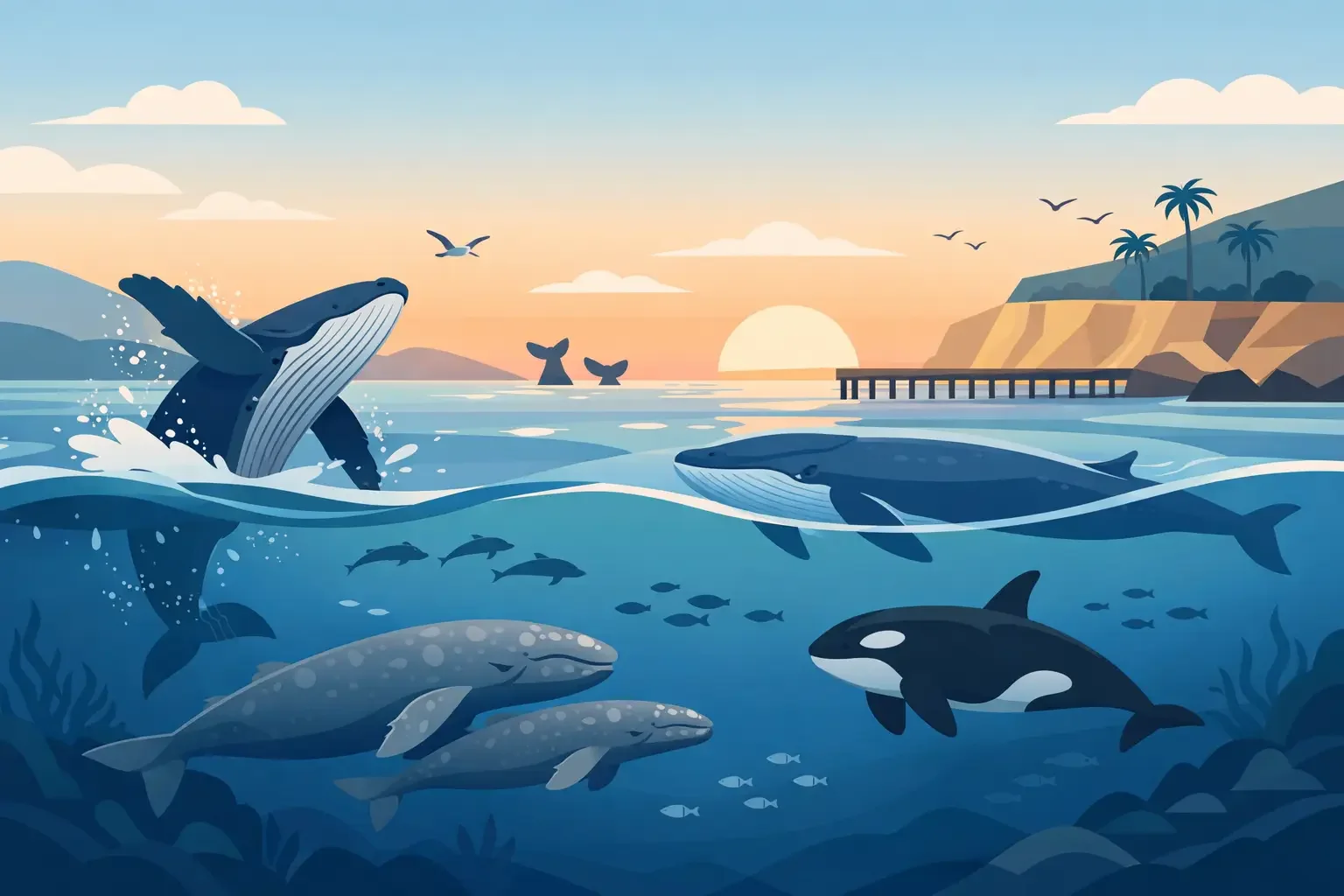
A calm morning off the Central Coast with SLO tours can turn unforgettable fast. One minute you are scanning the water beyond Pismo, the next you catch a blow on the horizon or the smooth back of a whale rolling through the swells. If you are asking what whales live off Pismo, the short answer is that several species pass through these waters, but the timing, distance from shore, and feeding patterns all shape what you are most likely to see.
The ocean off Pismo Beach sits along a productive stretch of California coastline where migratory routes and food-rich waters overlap. That means whale sightings are not just possible here - they are one of the best reasons to get out on the water in the first place. Some whales are seasonal regulars. Others are less common but still very real possibilities, especially during strong feeding years.
What whales live off Pismo Beach most often?
If you want the practical answer first, gray whales and humpback whales are the species most people ask about around Pismo Beach. Blue whales also show up in the broader Central Coast region during the right season. On rarer occasions, you might hear about minke whales, fin whales, or even orcas moving through.
That does not mean every trip brings every species. Whale activity changes with migration cycles, bait presence, ocean temperatures, and luck. Nature does not run on a schedule, which is part of what makes spotting whales here so exciting.
Gray whales
Gray whales are the classic California migration story. They travel along the Pacific coast between Arctic feeding grounds and the warm lagoons of Baja. Off Pismo, they are most commonly seen during migration season, usually in winter and early spring.
These whales tend to travel with purpose. You may see a steady blow, a back arching through the water, and sometimes a fluke if the whale dives deeper. Gray whales are often farther offshore than people expect from the beach, though they can come surprisingly close during migration. If conditions are clear and you are on a small, fast boat with a knowledgeable captain, your odds improve because you can cover more water and adjust quickly when a sighting pops up.
Humpback whales
Humpbacks are the fan favorites for good reason. They are powerful, active, and often more dramatic at the surface than other species. Off Pismo Beach and the nearby Avila coastline, humpbacks are usually associated with the feeding season, often from late spring into fall.
When bait is thick and the ocean is alive, humpbacks can put on a real show. You might see pectoral fins slapping, a deep fluke-up dive, or a sudden lunge through a bait ball. Not every humpback sighting is explosive, but they are the species most likely to deliver that jaw-drop moment people picture when they think about whale watching.
Blue whales
Blue whales are the giants. Seeing one off the Central Coast is a different kind of encounter - less splashy than a humpback at times, but far more humbling. They typically appear in California waters during summer and early fall when krill concentrations support feeding.
Blue whales are not guaranteed off Pismo on any given day, and they can range well offshore. Still, they are absolutely part of the larger answer to what whales live off Pismo Beach. When conditions line up, Central Coast waters can become a highway for the largest animal on Earth.
Less common visitors
Pismo-area waters can also host minke whales, fin whales, and occasional orcas. These are less predictable and less frequently reported than gray or humpback whales, but they are not out of the question.
Minke whales are smaller and more elusive, often surfacing briefly before disappearing. Fin whales can move through the region but are not common nearshore sightings for most casual viewers. Orcas are the wildcard. When they appear, it gets attention fast, but they are more of a special-event sighting than a species you should count on seeing during a standard outing.
Why whales come off Pismo
Whales do not choose this stretch of coast by accident. The waters off Pismo and Port San Luis sit near a highly productive marine zone shaped by upwelling, changing depths, and seasonal bait movement. In plain terms, this coastline can hold food.
For migrating gray whales, the area is part of a major travel corridor. For humpbacks and blue whales, feeding opportunities matter more. Anchovies, sardines, and krill all influence where whales spend time. If bait is stacked up and seabirds are working the surface, that is often a clue that bigger action could be nearby.
This is also why local knowledge matters. Whale watching is not just about heading into open water and hoping. It is about reading conditions, bird activity, current patterns, and recent sightings. The ocean changes daily, and the best trips follow the signs.
When to see whales off Pismo Beach
There is no single perfect month because different whales use the area differently.
Gray whale season usually builds in winter and carries into spring as animals migrate south, then north again. If your goal is to spot a whale during the colder months, gray whales are often the main target.
Humpback season tends to be strongest in the warmer part of the year, especially when feeding conditions are good. Summer and early fall can be excellent for humpback activity along the Central Coast.
Blue whales are most often associated with summer into early fall, though their presence depends heavily on offshore food conditions. In some years, sightings are better than others. That is one of the trade-offs with wildlife viewing on a real ocean, not in an aquarium. The reward is authenticity. The catch is that every season has its own personality.
Can you see whales from shore?
Yes, sometimes. Pismo Beach, Shell Beach, and nearby bluff viewpoints can all produce whale sightings, especially during gray whale migration. A spout on a clear day is possible from land, and patient observers do get lucky.
But shore viewing has limits. Distance compresses the experience. You may spot a blow and know a whale is out there without ever getting a real sense of the animal. Surface conditions, glare, fog, and angle all matter. What looks like an empty horizon from shore can become a wildlife-rich zone once you are out on the water.
That is where a small-group boat trip changes the equation. A nimble vessel can move toward active water, cover coastline efficiently, and give you a much closer look at not just whales, but dolphins, sea lions, sea caves, and bird life along the way. Around Port San Luis and Pismo, that flexibility is a big advantage because wildlife does not stay parked in one spot.
What a whale sighting actually feels like
People often focus on the species list, but the real magic is how the encounter unfolds. First comes the scan. Then someone spots a spout. The captain adjusts course. Everyone goes quiet for a second, watching the same patch of water. Then a back breaks the surface, bigger than expected, followed by that instant reaction you can never fake.
That is the difference between reading about whales and meeting one in its own environment. Even a brief sighting feels personal when you are close enough to hear the exhale and track the rhythm of the surfacing pattern. On a smaller boat, that moment feels even more immediate because you are not separated from the ocean by decks full of people.
For many guests, the whale is the headline, but the full experience matters too. The Pismo and Avila coastlineadds sea cliffs, caves, kelp, working harbors, and constant wildlife movement. Some days the whales steal the show. Other days dolphins race the boat and sea lions clown around while the whales stay farther out. That is part of the appeal. You are stepping into a living coastline, not a scripted attraction.
So, what whales live off Pismo?
The best answer is this: gray whales, humpback whales, and blue whales are the headline species off Pismo Beach, with occasional sightings of minke whales, fin whales, and orcas. If you are planning around probability, gray whales dominate migration season and humpbacks are a major draw in the warmer feeding months. Blue whales are possible when offshore conditions line up.
If your goal is not just to know the answer but to actually experience it, timing and access matter. A clear day helps. A good captain helps more. And getting out beyond the shoreline gives you the best chance to turn a question into a real sighting.
The next time the ocean off Pismo looks calm and empty from land, remember that some of the coast’s biggest wildlife is often just beyond the beach break, moving on its own schedule and waiting for the right eyes to find it.
Pismo Beach Ash Scattering Ceremony at Sea
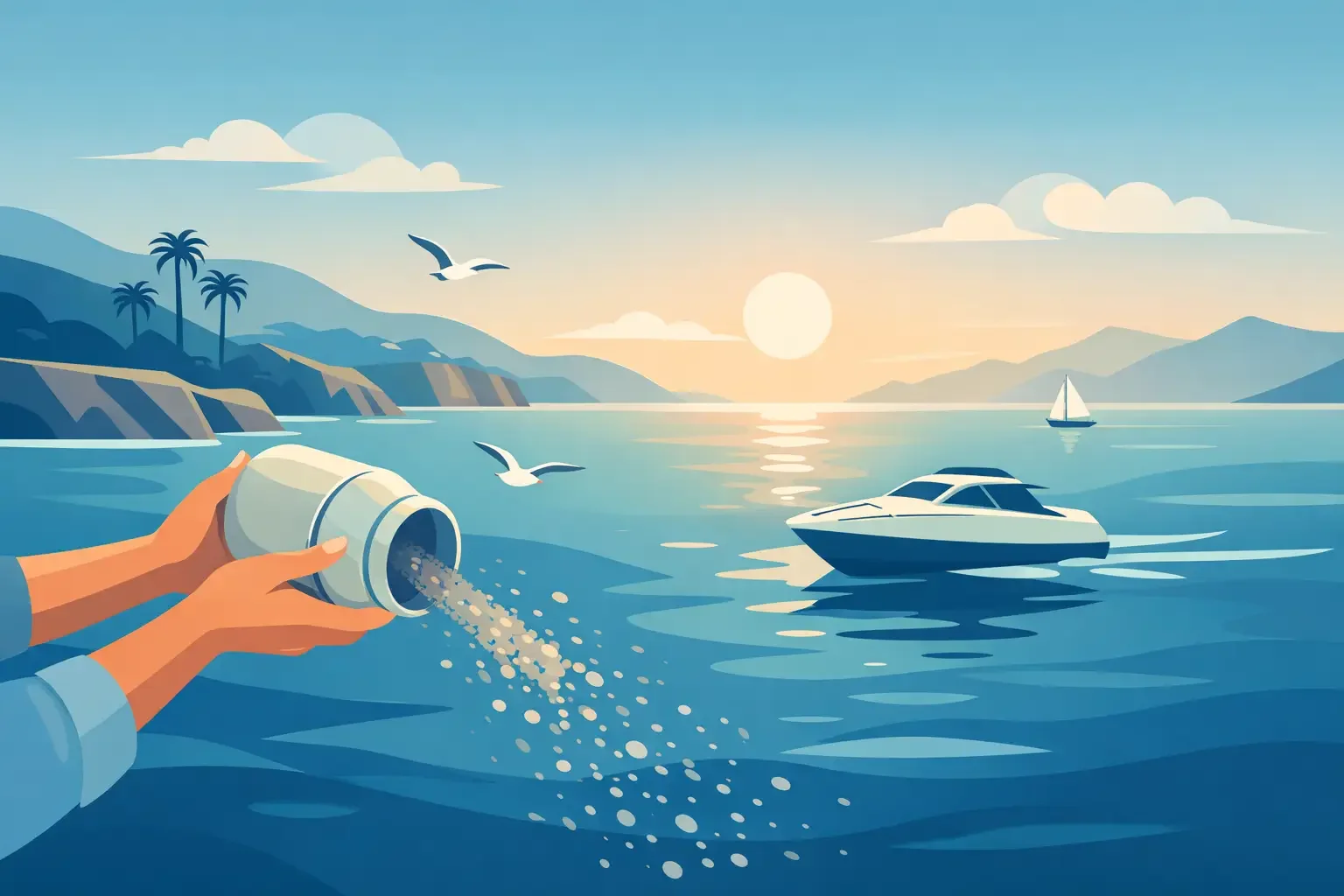
A farewell on the ocean feels different from one on land. The air is open, the horizon stretches out, and the moment tends to feel quieter, even with salt spray and the sound of the boat under you. For families considering ash scattering at sea California, that setting can offer something deeply personal - a simple, dignified way to say goodbye in a place that feels wide, natural, and unforced.
On the Central Coast, that experience also comes with practical questions. People want to know what is allowed, how far offshore a vessel must go, whether witnesses can attend, and what conditions on the water might look like on the day. Those details matter. A meaningful ceremony is not just about the location. It is also about knowing the process is being handled properly, safely, and with respect.
What ash scattering at sea in Avila Beach California usually involves
In most cases, ash scattering at sea California means a licensed boat carries the cremated remains offshore to a legal release area, where the ashes are committed to the water. Some families prefer a quiet, private gathering with only a few close relatives. Others want a short spoken tribute, a pause for reflection, flowers, or a favorite reading before the release.
The appeal is easy to understand. The ocean is part of life on the California coast, and for many people it was part of the person being remembered. Maybe they loved fishing, sailing, whale watching, or simply sitting near the water in Avila Beach or Pismo Beach. A ceremony at sea can feel less formal than a chapel service, but no less significant.
The boat itself also shapes the experience. A smaller charter can feel more intimate than a large commercial vessel. With a limited passenger count, families are not sharing the moment with strangers, and the ceremony can move at a pace that feels personal rather than rushed.
The legal rules for scattering ashes at sea in California
California does allow cremated remains to be scattered at sea, but there are rules that need to be followed. The most important one is distance from shore. Ashes generally must be scattered at least 500 yards from land. That requirement is one reason families usually work with a professional operator rather than attempting to manage it on their own.
There are also reporting requirements. After a burial or scattering at sea, the event must be documented with the proper state paperwork. A professional ash scattering service should understand what information is needed, how the location is recorded, and how the process is handled after the trip.
It is also worth knowing that not every item can legally go into the water. Loose flowers are often acceptable, but plastic, metal, and non-biodegradable containers are not. If a family wants to include petals, wreaths, or another ceremonial element, it is smart to confirm in advance what is appropriate and what should stay on board.
Because regulations can change and specific situations vary, the best approach is simple: ask direct questions before you book. A qualified operator should be able to explain the offshore distance, vessel procedures, passenger capacity, and any paperwork involved in plain English.
Choosing the right boat for ash scattering at sea California
Not every boat creates the same atmosphere. That matters more than many people expect.
For some families, a large vessel feels stable and familiar. For others, it can feel impersonal. A smaller charter boat often creates a more private experience, especially when the group is limited to immediate family or a handful of close friends. You can hear each other clearly, take your time, and focus on the moment instead of the logistics of being one group among many.
On the Central Coast, sea conditions can also influence what kind of vessel makes sense. A professionally operated boat built for local ocean conditions offers an advantage, especially in an area where wind and swell can change the feel of a trip from one day to the next. Speed and maneuverability can help as well, allowing the captain to reach an appropriate offshore location efficiently while still choosing water that feels comfortable for the group.
This is one of those situations where cheaper is not always better. Families are not booking a sightseeing ride. They are trusting a captain and crew with an important memory. Experience, local knowledge, and clear communication usually matter more than finding the lowest price.
What to expect on the day of the ceremony
Most ash scattering charters begin with a check-in at the harbor, followed by a short safety briefing and boarding. From there, the captain heads offshore to a legal scattering area. Travel time depends on the harbor, the weather, and how far the vessel needs to go, but the ceremony itself is often simple and unhurried.
Some families know exactly what they want to say. Others do not. Both are normal. There is no required script, and a good operator will not force the moment into a formula. You might choose a prayer, a short reading, a favorite song played quietly from a phone speaker, or a few words spoken spontaneously once the boat comes to rest.
There is also a practical side people often do not think about until they are on board. Wind direction matters. Ocean drift matters. The captain will usually position the boat so the release is handled cleanly and respectfully, without blowing ashes back toward passengers. That kind of detail may sound small, but it makes a real difference in how the ceremony feels.
After the scattering, some groups stay quiet for a few minutes. Others share stories on the ride back. Depending on the season, it is not unusual to see pelicans, sea lions, dolphins, or even whales in the distance. For many families, that mix of remembrance and living coastline feels right - solemn, but not heavy.
Weather, comfort, and the it-depends factors
Ocean ceremonies are beautiful, but they are still ocean trips. Conditions matter.
California weather can look calm from shore and feel completely different once you leave the harbor. Wind, swell, fog, and afternoon chop can all shape the experience. A responsible charter operator will be honest about this. Sometimes the best decision is to keep the booking as planned. Sometimes it is to shift the departure time. Occasionally, it is to reschedule for a better weather window.
That flexibility is part of professional operation, not a drawback. If comfort is a priority, ask about the smoothest times of year, the most protected departure windows, and whether the trip is suitable for elderly passengers or guests who are nervous on the water. Families with mixed ages often appreciate clear guidance here.
Clothing matters too. Even on a sunny day, it can feel cooler offshore than people expect. Layers, sunglasses, and flat, secure shoes are usually better than dressing for the beach. If anyone in your group is prone to motion sickness, it is smart to plan ahead rather than assume it will be fine.
Why local knowledge makes a difference
A memorial at sea is not the time for guesswork. Local captains know where conditions tend to be rougher, when harbor traffic is busiest, and how to choose a route that feels both legal and appropriate for the ceremony. They also understand the emotional side of the trip. Families may need clear direction without feeling hurried. They may want privacy, but also reassurance.
That balance matters on the Central Coast, where the water can be stunning one hour and unsettled the next. Operators with real experience in Port San Luis and the surrounding coastline can read those patterns better than someone treating the trip like a generic charter.
For that reason, many families prefer a small, professionally run local company over a larger operation with a less personal approach. SLO Tours is one example of the kind of operator families often look for - experienced on these waters, comfortable with intimate groups, and equipped to create a respectful experience without losing the natural beauty of being out on the ocean.
Questions worth asking before you book
Before choosing a provider, ask how many passengers the boat can accommodate, whether the trip is private, what the weather policy is, and what the ceremony can include. You should also ask who handles the required reporting after the scattering and whether the captain has experience specifically with memorial charters.
It is also reasonable to ask about boarding ease. Some guests are active and comfortable on boats. Others may have mobility concerns or simply feel anxious about getting on and off the vessel. A good operator will answer those questions directly and help you understand what to expect.
The right charter should leave you feeling calmer, not more uncertain. If answers are vague, that is usually a sign to keep looking.
Ash scattering at sea in Port San Luis Obispo can be simple without feeling small. With the right boat, the right captain, and a stretch of California coast that meant something to the person you are honoring, the day often becomes less about logistics and more about being present for a final goodbye that feels true to them.
Pismo Beach Whale Watching
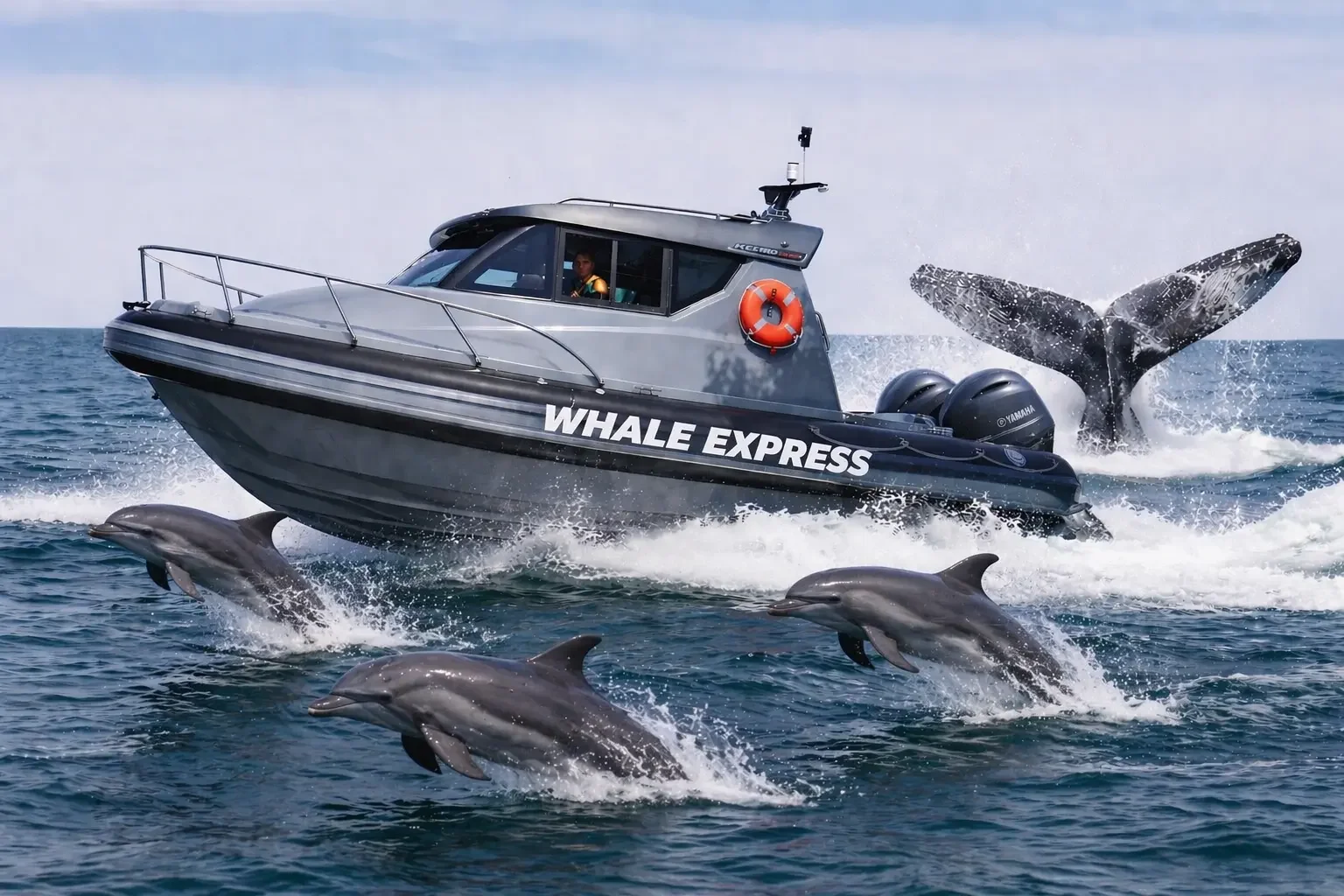
If you want more than a slow loop offshore with a crowd at the rail, the Pismo Beach Whale Express changes the pace immediately. This is the kind of trip where you feel the coastline, not just look at it - a fast, intimate ride built for people who want real wildlife encounters, dramatic scenery, and a front-row seat to the Central Coast.
Why the Pismo Beach Whale Express feels different
Most whale watching trips ask you to trade excitement for capacity. Bigger boats carry more people, offer a smoother public-tour feel, and keep the experience fairly predictable. That works for some guests. But if you want something more personal, speed and maneuverability matter.
The Whale Express is designed for a very different outing. Instead of loading dozens of passengers and heading out on a fixed sightseeing pattern, it keeps the group small and the experience flexible. With only six passengers aboard, every seat feels close to the action. You are not craning around a crowd to catch a glimpse of a spout. You are already in position, camera ready, watching the water with a guide who knows the local coastline and the wildlife patterns that make each trip unique.
That smaller format also changes the mood. Families can share the moment without getting split up. Couples get a trip that feels more private than public. Locals bringing out-of-town visitors can skip the mass-tour atmosphere and choose something that actually feels special.
What you can see on a Pismo Beach Whale Express tour
Whales are the headline, but they are not the whole story. The stretch of coast near Port San Luis, Avila Beach, and Pismo Beach is active, scenic, and constantly changing. On the right day, the boat ride itself is part of the thrill, with open-water speed, rocky shoreline views, and close passes by landmarks larger boats often view from farther away.
Depending on the season, guests may spot humpback whales, gray whales, dolphins, sea lions, otters, and a range of seabirds. Some days the whales steal the show with repeated surfacing and dramatic blows. Other days the magic comes from the broader marine environment - bait balls, birds working the water, sea lions hauled out near the rocks, and those quiet stretches when everyone is scanning the horizon together.
That is one of the honest realities of whale watching: nature runs the schedule. No reputable operator should promise a whale breach on command. What a better tour can promise is a more immersive way to be out there, a guide who understands the local water, and a boat that can respond quickly when wildlife activity shifts.
Speed matters more than people think
One of the biggest advantages of the Whale Express is not just that it is smaller. It is that it is fast.
A military-grade Zodiac RHIB handles the coast differently than a large sightseeing boat. It can cover water quickly, react to changing conditions, and get guests into position without turning the outing into a long, drawn-out transit. That matters when whales are active in one zone and birds or dolphins are lighting up another.
It also matters for sightseeing. The coastline here is not flat and repetitive. It is packed with sea caves, rock formations, working harbor views, and rugged shoreline detail that becomes far more memorable when you can approach it closely and move between points efficiently. The result is a trip that feels active from start to finish.
There is a trade-off, of course. A small adventure boat is a more dynamic ride than a large commercial vessel. That is part of the appeal, but guests should choose it for the right reasons. If you want a quiet floating platform with lots of enclosed space, this is not that. If you want a guided marine adventure that still feels professionally operated and family-friendly, it hits the mark.
Who the Pismo Beach Whale Express is best for
This experience tends to click with travelers who want their coastal activity to feel memorable, not generic. It is a strong fit for couples looking for something more exciting than a standard harbor cruise, for families with older kids who will love the ride itself, and for small groups who want to share the boat without disappearing into a crowd.
It is also a good choice for locals. People who already know the beaches often want a fresh angle on a familiar place. Seeing the coastline from the water, at speed, with wildlife in the mix, does exactly that. Even longtime Central Coast residents are often surprised by how different these landmarks look from just offshore.
For first-time boat tour guests, the format can actually be reassuring. A small group means easier communication with the captain, more room to ask questions, and a less overwhelming environment than a packed public tour. The trip still feels adventurous, but not chaotic.
What to expect before you book
Practical details matter because the right expectations make the trip better.
The first thing to know is that this is a premium small-group experience, not a bargain-basement sightseeing seat. You are paying for capacity limits, vessel performance, better access, and a more personal format. For many guests, that premium is exactly what makes the trip worth it.
The second is that conditions can vary. Ocean outings always depend on weather and sea state. Some days are calm and glassy. Others have more motion and spray. That variety is normal on the Central Coast. Dressing in layers, wearing practical shoes, and expecting a little adventure goes a long way.
Timing matters too. Whale activity shifts by season, and no two trips are exactly alike. If whales are your top priority, it helps to book during the strongest viewing windows and stay flexible about the fact that wildlife is wild. If your goal is a broader scenic and marine adventure, almost every outing offers something worth seeing.
Why small-group whale watching often wins
There is a reason boutique marine tours keep earning repeat guests. They feel less like transportation and more like participation.
On a six-passenger boat, your guide can tailor the experience to the conditions and the interests onboard. If wildlife is active in one area, the group can move. If the sea caves and shoreline are especially striking that day, they can become part of the story instead of an afterthought. Questions get answered in real time. Kids stay engaged. Adults do not feel like they are listening to a canned speech over a loudspeaker.
That flexibility is especially valuable on a coastline as varied as this one. The best moments are often the ones no script could plan - dolphins suddenly pacing the boat, a whale blow appearing where the horizon looked empty seconds earlier, or a perfect light-and-water view of the cliffs near shore.
The local advantage
A good boat is only half the equation. Local knowledge is what turns a ride into a strong wildlife tour.
Operators who know this stretch of coast understand where conditions change, how marine life tends to move through the area, and which sections of shoreline deliver the most visual payoff. They also know when to push farther and when to let a moment develop. That kind of judgment is hard to fake and easy to appreciate once you are on the water.
SLO Tours has built its reputation around that local familiarity paired with a genuinely more intimate vessel format. Since 2009, that combination has appealed to guests who want something more memorable than standard sightseeing without giving up the confidence that comes from a professionally run operation.
Is the Pismo Beach Whale Express worth it?
If your idea of a good whale watching trip is simply checking a box, there are cheaper ways to get on the water. But if you care about the quality of the experience - the closeness, the pace, the scenery, the chance to see more of the coast in a single outing - then the value becomes pretty clear.
The real appeal is not just whales. It is that the whole trip feels alive. You leave the harbor, the coast opens up, the boat responds instantly, and every patch of water seems like it might hold the next surprise. That energy is hard to create on a larger, slower vessel, and it is exactly what many travelers are hoping for when they picture a Central Coast marine adventure.
For guests choosing between a standard sightseeing boat and a small, fast Zodiac-style tour, it really comes down to preference. If you want comfort through distance and scale, go bigger. If you want access, excitement, and a more personal wildlife experience, the Whale Express is the better fit.
The best trips on this coast are the ones that make you forget your phone for a while, keep your eyes on the horizon, and send you back to shore feeling like you actually experienced the place instead of just passing by it.
Location of SLO tours and Pismo Beach Whale Watching Tours
SLO Tours Location
📍 Port San Luis (Harford Pier)
3975 Avila Beach Drive
San Luis Obispo, CA 93405
SLO Tours departs from the Public Landing on Harford Pier in Avila Beach. When you arrive:
Park in the main parking lot at Port San Luis.
Walk out onto Harford Pier.
Pass the small blue sportfishing building.
Head down the stairs to the Public Landing boat dock.
Do not drive onto the pier for parking.
You are not checking in at the very end of the pier.
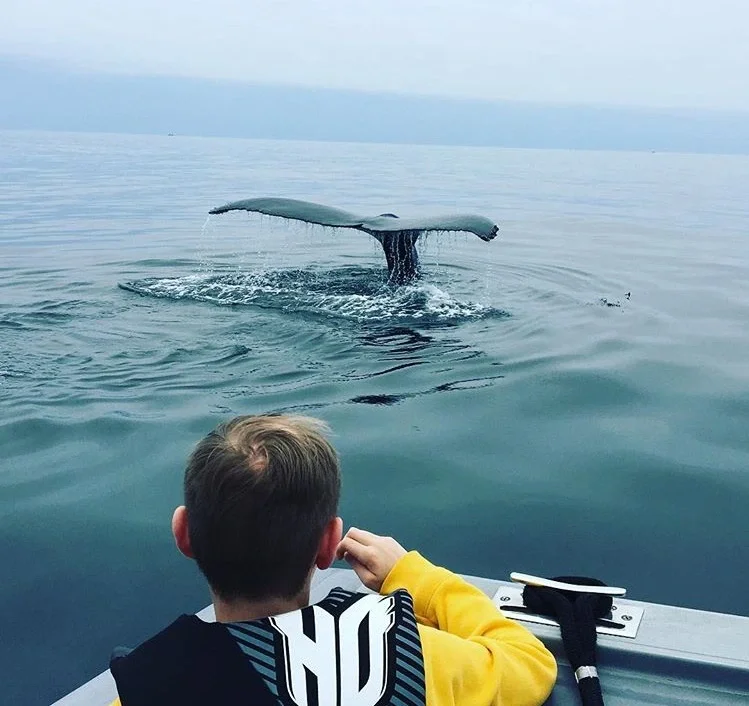
Whale Watching for all Ages
🐋 Whale Watching with SLO Tours in San Luis Obispo Bay 🌊
Create unforgettable family memories aboard SLO Tours' exciting Whale Express. Departing from Port San Luis, this adventure is perfect for all ages—including children and kids—offering an up-close encounter with the incredible marine life of California's Central Coast.
From playful dolphins and curious sea otters to majestic humpback whales breaching just offshore, every trip brings the possibility of witnessing nature at its finest. The comfortable, enclosed Zodiac RHIB provides a smooth and thrilling ride, making it an ideal experience for families seeking both excitement and lasting memories.
Whether it's your child's first time spotting a whale or a lifelong dream come true, SLO Tours delivers an ocean adventure your family will never forget. Since 2009, they've welcomed guests of all ages aboard their intimate tours, and even infants are welcome with a ticket.
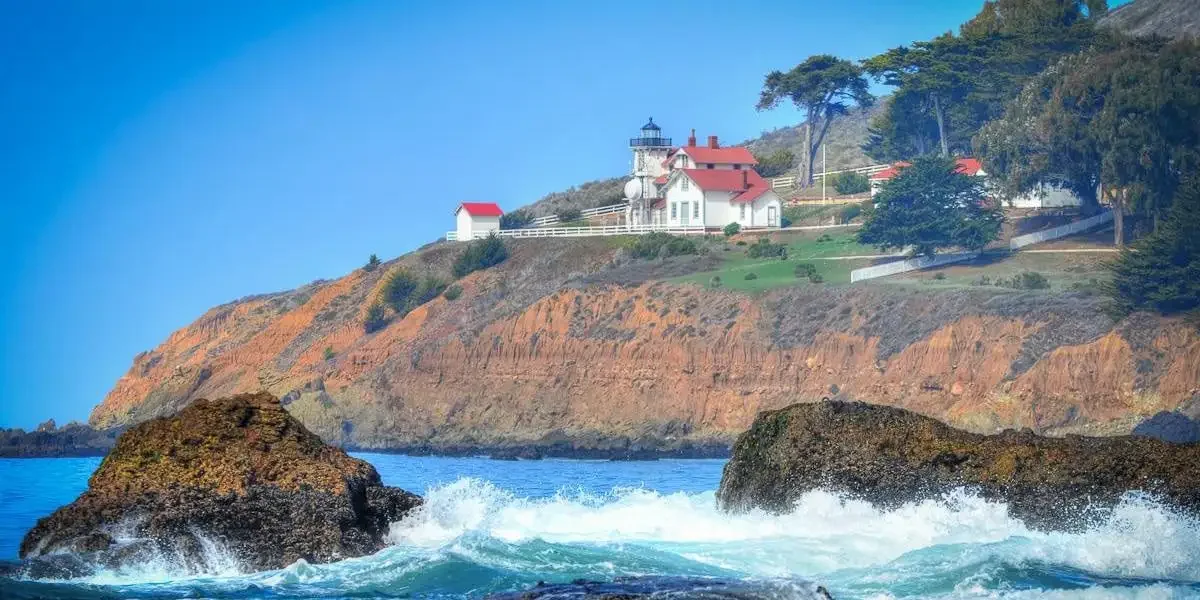
Port San Luis Lighthouse Tour
Lighthouse Adventure
With this tour, you have the unique opportunity to view the iconic Point San Luis Lighthouse from both the land and the sea. Our specialized boat allows for beach landings, making it easy and convenient to access the secluded Secret Beach and explore the lighthouse grounds up close. $55
San Luis Obispo “SLO” tours
Why a zodiac boat tour California coast travelers choose feels different
A Zodiac RHIB, or rigid hull inflatable boat, is designed for performance. It combines a solid hull with inflatable tubes, which helps create a ride that is stable, responsive, and well suited for nearshore adventure. For guests, that usually means a closer look at the landscape without the crowded, slow-moving feel of a big commercial vessel.
On the Central Coast, that matters. The shoreline around Port San Luis, Avila Beach, and Pismo Beach is full of detail - sea caves, kelp beds, rocky ledges, harbor activity, and sudden wildlife sightings. A smaller boat can pivot quickly, adjust to conditions, and spend more time where the interesting stuff actually is.
There is also a more human side to it. A six-passenger format creates a completely different energy than a packed deck. You can hear your captain. You can ask questions. You are not fighting for rail space or trying to glimpse a sea lion between shoulders. For couples, families, and small groups, that intimacy is often the whole point.
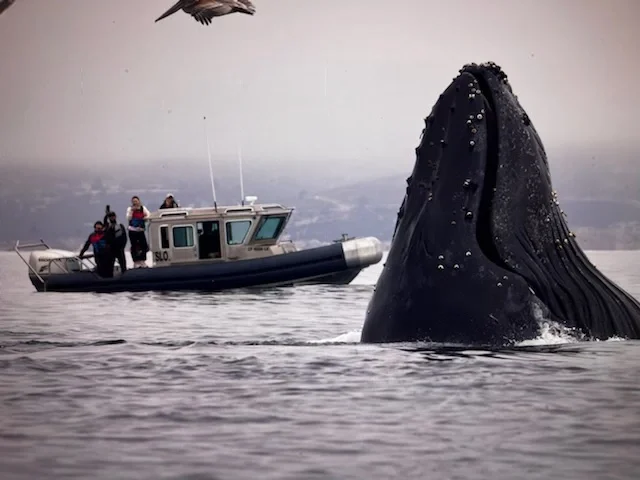
Pismo Beach Whale Watching Tours
If you’re looking for humpback whale tours around Pismo Beach, you’re in a great spot—San Luis Bay (Pismo + Avila area) is one of the best places on California’s Central Coast to see them, especially in late summer through fall. Reserve today with SLO tours